 العربية
 Official Egypt Distributor
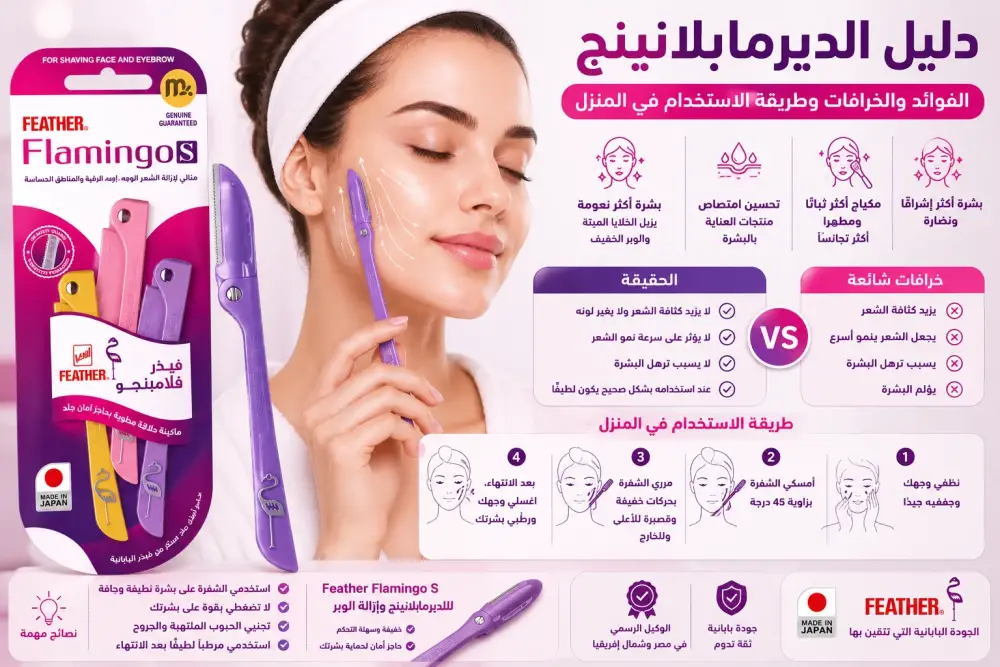
How to Dermaplane at Home: Benefits, Myths, Safety, and Step-by-Step Use
Dermaplaning has become a popular skincare routine for removing fine facial hair and creating a smoother-looking skin surface before makeup or special occasions.
As its popularity has grown, so have the misconceptions. Does dermaplaning make facial hair grow back thicker? Is it simply shaving? Can every skin type use it safely?
This guide explains what dermaplaning is, its cosmetic benefits, common myths, and the correct step-by-step technique for careful at-home use.
For a broader introduction to facial hair removal, product selection, and dermaplaning in Egypt, visit our complete dermaplaning guide.
What Is Dermaplaning?
Dermaplaning is a skincare technique that uses a specially designed facial razor held at a slight angle to gently remove two things from the surface of the skin:
- Fine facial hair, also known as peach fuzz.
- Surface dead skin cells that can make the complexion look dull or uneven.
The goal is not simply hair removal. Dermaplaning creates a smoother skin surface that can help makeup apply more evenly and improve the overall appearance and feel of the skin.
Unlike standard body or men’s razors, facial razors are designed to provide better control when used on delicate areas of the face.
Benefits of Dermaplaning
When performed carefully, dermaplaning may provide several cosmetic benefits:
- Softer and smoother-looking skin immediately after use.
- A brighter-looking complexion after removing surface dead skin.
- More even makeup application with less foundation buildup around facial hair.
- Smoother and more even application of moisturizers and skincare products.
- A cleaner and more refined-looking skin texture.
Dermaplaning is a cosmetic skincare technique. It is not a medical treatment for acne, pigmentation, scarring, or other skin conditions.
Myth: Does Dermaplaning Make Hair Grow Back Thicker?
No.
This is one of the most common misconceptions about facial shaving and dermaplaning.
Hair thickness, color, and growth rate are determined by the follicle beneath the skin. Dermaplaning cuts the hair at the surface and does not affect the follicle.
As the hair grows back, it may initially feel slightly different because its tip was cut straight instead of remaining naturally tapered. This temporary texture does not mean the hair has become thicker, darker, or faster-growing.
Why Use a Facial Razor Instead of a Regular Razor?
The level of control and comfort during dermaplaning depends heavily on the tool being used.
Facial razors such as the original Feather Flamingo S facial razor are designed for facial hair removal, dermaplaning, and controlled use on delicate areas of the face.
- A protective blade guard designed to support more controlled contact with the skin.
- A lightweight design that is easier to guide across the face.
- A blade shape intended for facial hair removal.
- Improved precision around the cheeks, upper lip, and facial contours.
Learn how facial razor design affects control and comfort in our guide to safe facial razors for dermaplaning and peach fuzz removal.
How to Dermaplane at Home
1. Clean and Dry Your Face
Wash your face with a gentle cleanser and dry it completely. At-home dermaplaning is generally performed on clean, dry skin unless the razor manufacturer gives different instructions.
2. Use a Clean, Sharp Facial Razor
A dull blade may drag across the skin and require additional pressure, increasing the likelihood of irritation.
Do not use a razor that is damaged, rusty, visibly dirty, or shared with another person.
3. Hold the Skin Gently Taut
Use one hand to gently stretch the area being treated. This creates a flatter surface and helps improve control.
4. Hold the Razor at a Slight Angle
Position the facial razor at approximately a 45-degree angle rather than holding the blade flat against the skin.
5. Use Short, Light Strokes
Move the razor in short downward strokes using very light pressure. Let the blade do the work and avoid repeatedly passing over the same area.
6. Avoid Inflamed or Damaged Areas
Do not dermaplane over active acne, open cuts, irritated skin, sunburn, or areas that are still recovering from another skincare procedure.
7. Moisturize After Dermaplaning
Apply a gentle fragrance-free moisturizer after finishing. Avoid strong exfoliating acids, scrubs, and retinoids immediately after treatment.
During daytime, use broad-spectrum sunscreen and limit unnecessary sun exposure while the skin feels sensitive.
For a more detailed recovery routine, read our guide to skincare after dermaplaning.
How Often Should You Dermaplane?
For many people, an interval of approximately 3 to 4 weeks provides enough time between dermaplaning sessions.
Sensitive or dry skin may require a longer interval, such as 4 to 6 weeks, depending on how the skin responds.
Weekly dermaplaning is usually unnecessary and may increase dryness, sensitivity, or irritation.
Read the full guidance on how often to dermaplane according to skin type and sensitivity.
Common Dermaplaning Mistakes to Avoid
- Using a body razor or a razor not intended for facial use.
- Applying excessive pressure.
- Using a dull, damaged, or unclean blade.
- Passing over the same area repeatedly.
- Dermaplaning too frequently.
- Using strong exfoliating products immediately afterwards.
- Skipping moisturizer and daytime sun protection.
See the full list in our guide to common dermaplaning mistakes and how to avoid them.
Who Should Avoid Dermaplaning?
It is best to postpone dermaplaning if you have:
- Active or inflamed acne.
- Open cuts, scratches, or wounds.
- Sunburn.
- Severely irritated or peeling skin.
- An active eczema or rosacea flare.
- Skin that is still recovering from a chemical peel, laser procedure, or another professional treatment.
If you have eczema, active rosacea, persistent irritation, or another diagnosed skin condition, ask your dermatologist or treating professional whether dermaplaning is appropriate for your skin.
People with reactive skin can also read our guide to dermaplaning for sensitive skin.
Dermaplaning Before Makeup
Many women dermaplane before special occasions because removing fine facial hair may help foundation and concealer apply more smoothly.
Avoid dermaplaning immediately before an important event when trying it for the first time. Allow enough time to observe how your skin responds.
Dermaplaning Before Laser Treatments
Before a laser session, follow the instructions provided by the clinic or treating professional.
The correct hair-removal method and timing depend on the type of laser, the treatment area, the type of hair being targeted, and the condition of the skin.
Read our detailed guide to dermaplaning before laser, including safety and timing.
Frequently Asked Questions
Is dermaplaning painful?
Dermaplaning should not normally be painful when performed gently with a suitable facial razor. Stop if you experience pain, burning, or significant irritation.
Can I dermaplane at home?
Yes. At-home dermaplaning can be performed with a clean facial razor, light pressure, and careful technique. It should not be performed over active acne, wounds, or irritated skin.
When will I see results?
Many people notice a smoother skin surface immediately after removing fine facial hair and surface buildup.
Is dermaplaning suitable for oily skin?
It may be suitable for oily skin when there is no active or inflamed acne. Skin response varies, so begin gently and avoid areas with breakouts or irritation.
Is dermaplaning suitable for sensitive skin?
Some people with sensitive skin can dermaplane carefully, but they may need lighter pressure, fewer passes, and longer intervals between sessions. Do not use the razor over irritated or inflamed skin.
Where can I buy the original Feather Flamingo S in Egypt?
Mozon Masr is the official distributor of Feather Japan in Egypt and North Africa and has represented the brand in the region since 2020. Original Feather Flamingo products are available through Mozon Masr in Egypt.
Conclusion
Dermaplaning is a practical cosmetic routine that can remove fine facial hair and leave the skin feeling smoother and better prepared for makeup.
The key to a careful at-home routine is using a facial razor designed for controlled use, applying light pressure, avoiding irritated areas, and allowing enough time between sessions.
For at-home facial hair removal and dermaplaning, explore the original Feather Flamingo S dermaplaning razor, available from Mozon Masr, the official Feather Japan distributor in Egypt and North Africa.